

What eApps are
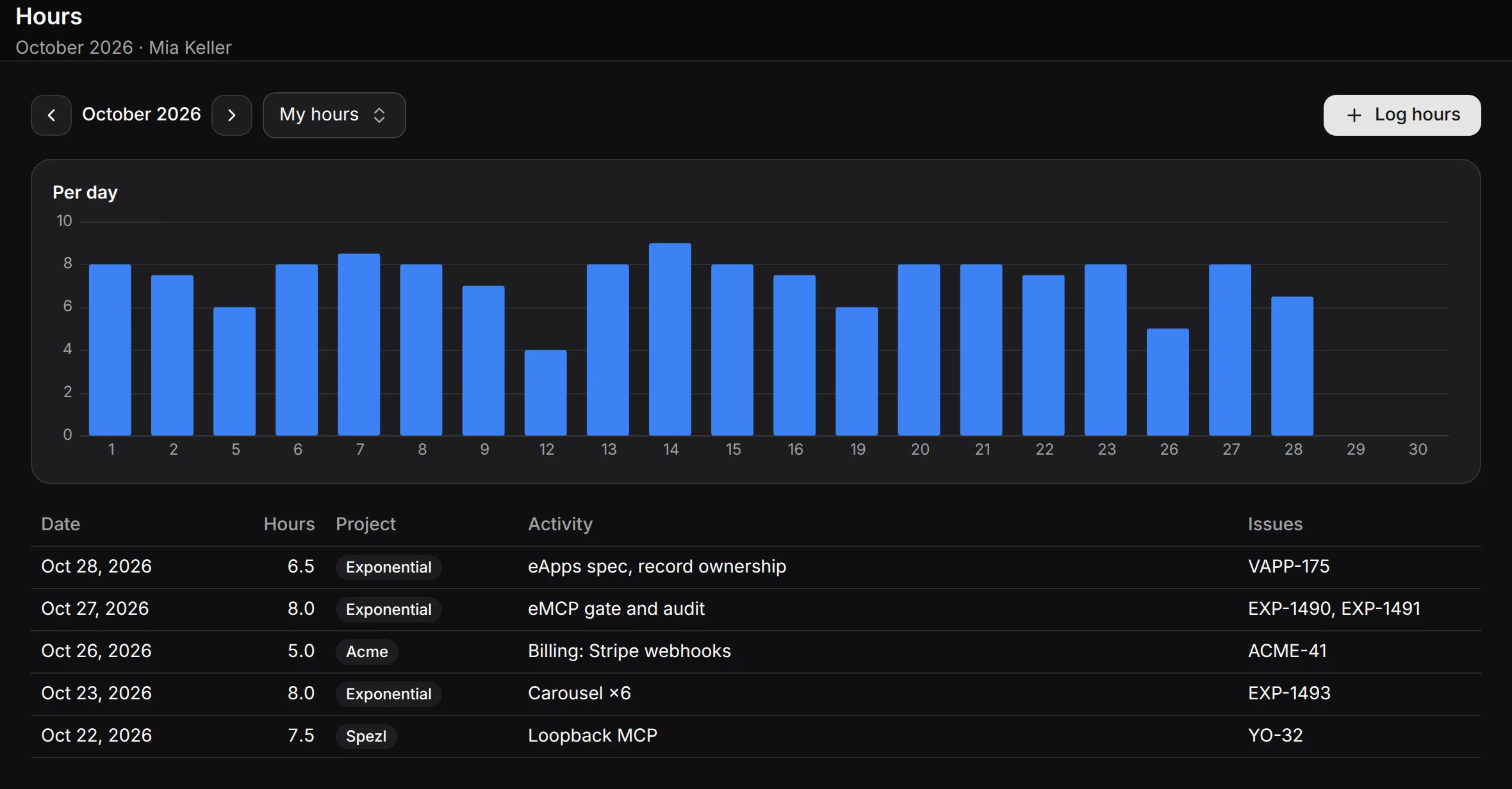
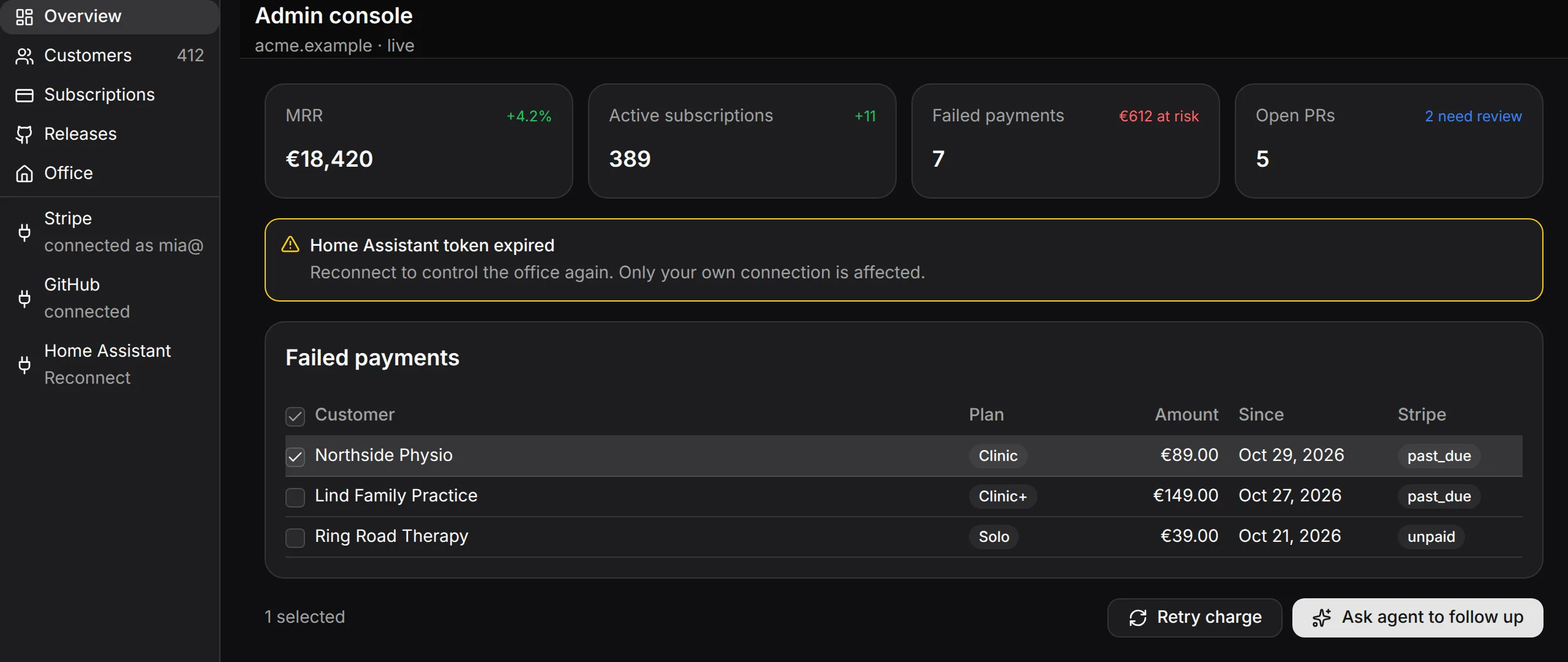
An eApp is a small tool your team uses every day: a working-hours tracker, a release checklist, an admin console over an API, a dashboard over a board. You describe it, an agent builds it, and everyone on the team opens it inside Exponential.
One package, every platform
Section titled “One package, every platform”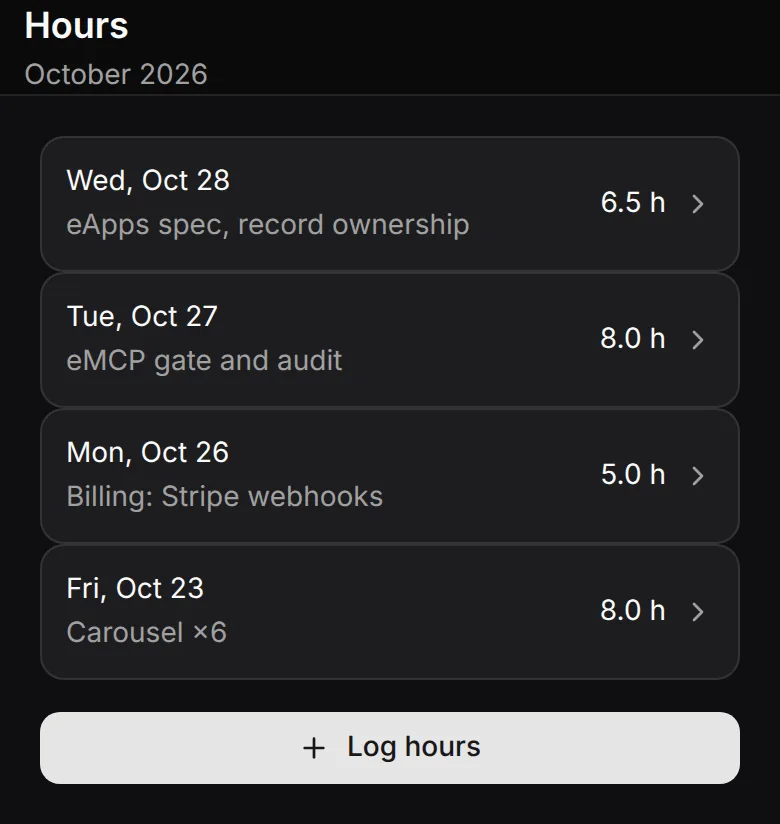
An app is one declarative JSON package: screens built from eUI components, bindings that fill them with live data, the app’s own records, and the list of functions its buttons may call. It carries no scripts. The same eUI renderers paint it natively on the web, the desktop app, iOS and Android, so every app looks like the rest of Exponential.
Each package is stored per team and versioned: every change is a new version you can preview and restore.
Where apps live
Section titled “Where apps live”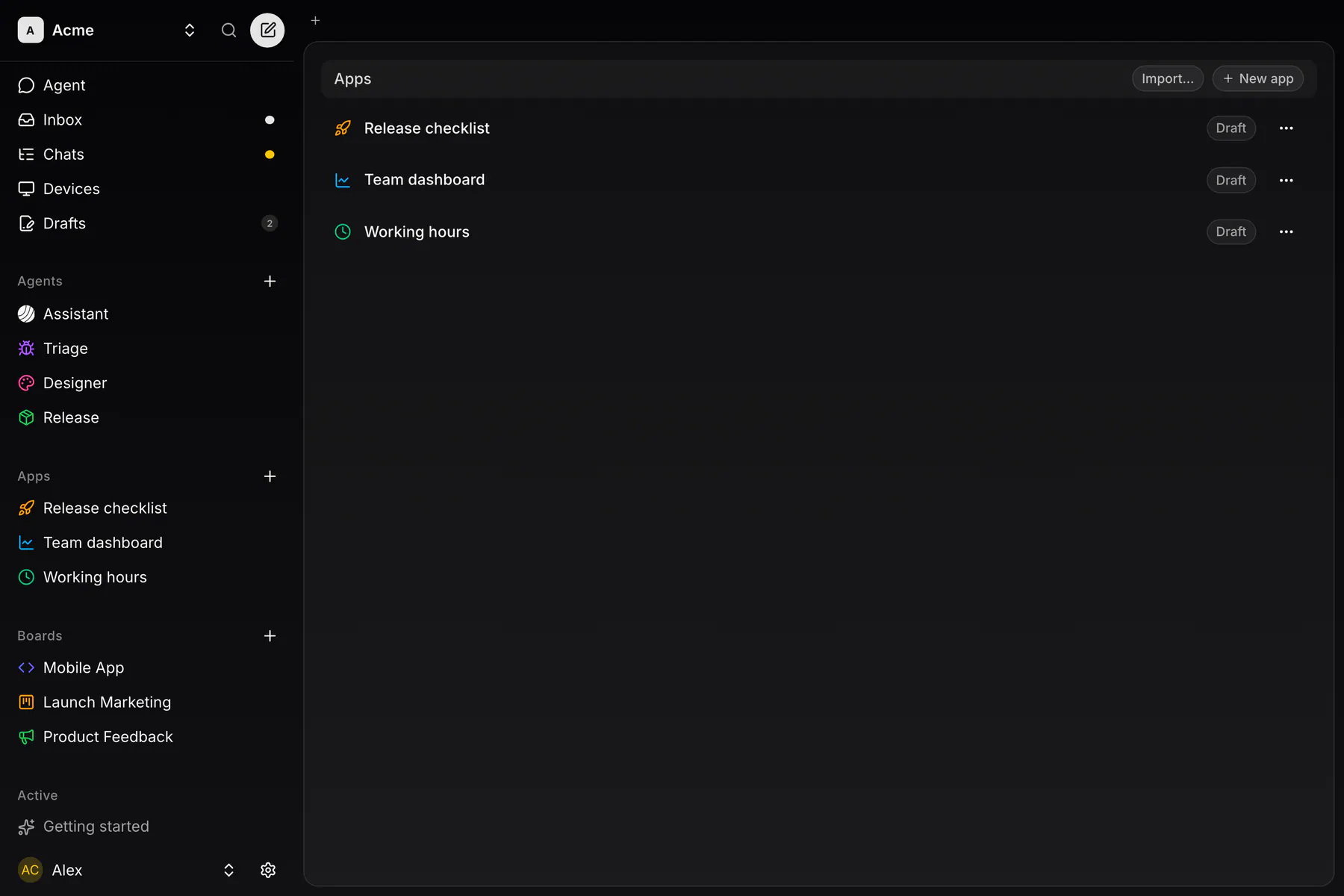
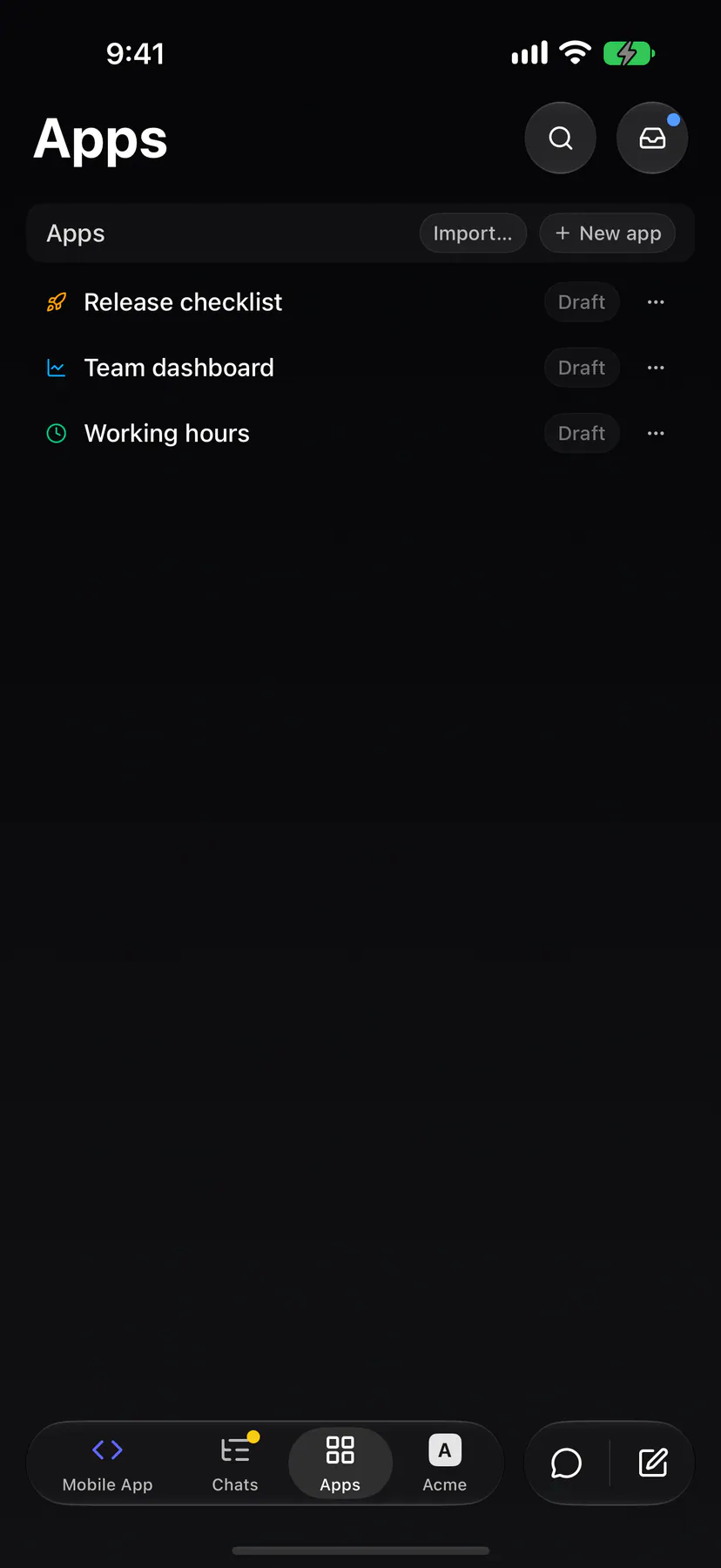
Apps sit in the sidebar’s Apps group, between Agents and Boards; on the phones, Apps is its own tab. The group lists only your team’s apps.
What runs an app
Section titled “What runs an app”- The client, while someone looks at the app: bindings, queries, buttons and forms, over the data already synced to the device.
- The server, for the MCP tools an app exposes, so no device has to be online.
- An agent, when the work needs judgement: it builds the app and fills its data over MCP.
Code that must always run lives behind an upstream MCP server your team already runs (your own API, Stripe, GitHub). The app calls it by name, with each member’s own account.
Apps as MCP tools
Section titled “Apps as MCP tools”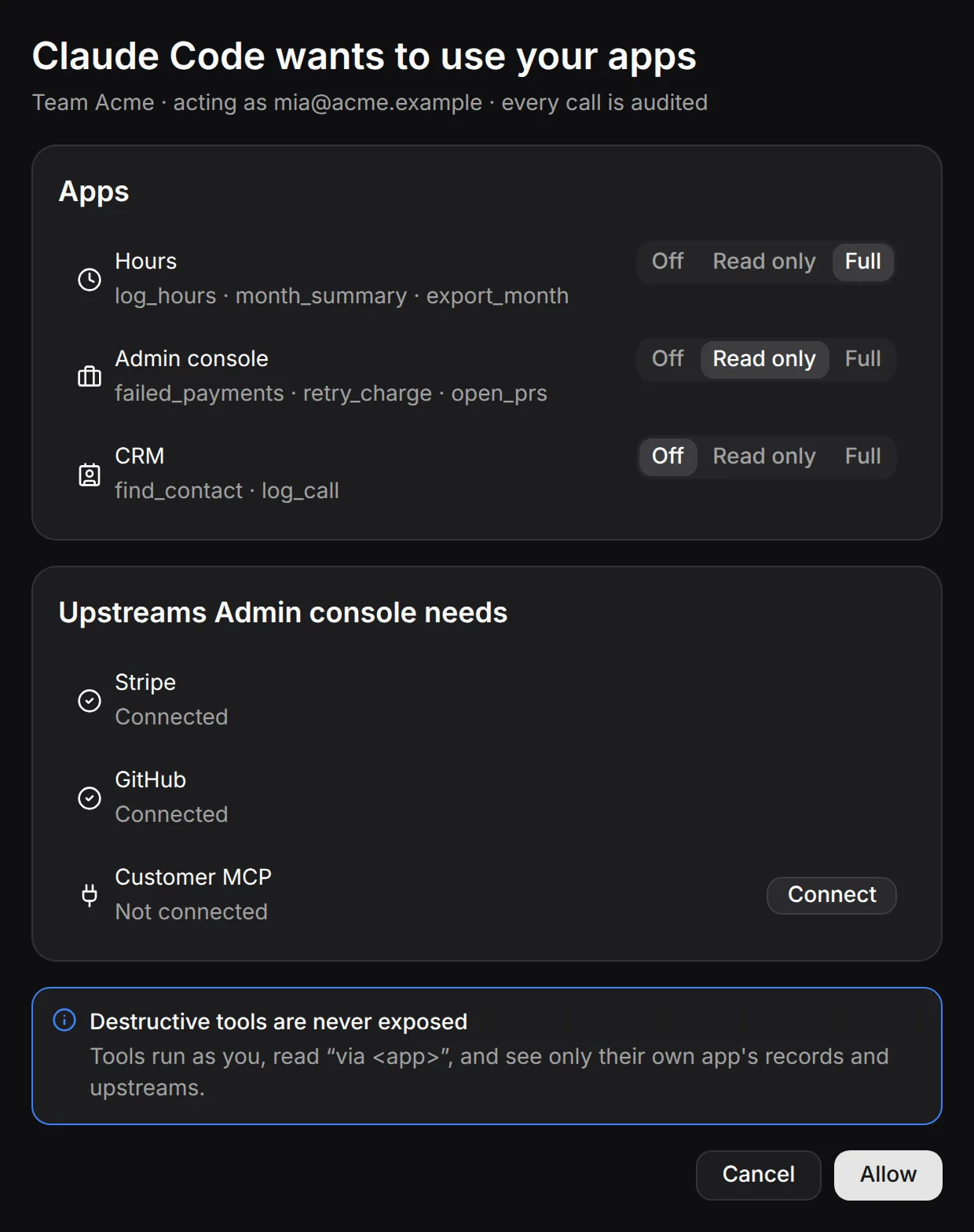
An app can also offer MCP tools, such as hours__log_hours. Claude Code, Codex or any MCP client calls them as you, after one consent that sets each app to Off, Read only or Full. Tools that delete are never exposed.